Types of Commercial Food Warmers: A Complete Overview
Short answer: there are six commercial food warmer families: chafing dishes (moist, 135–165°F / 57–74°C), heat lamps (dry radiant, fastest), electric soup kettles, heated drawers, induction units and holding cabinets. Most operations need two — usually chafing dishes on the line plus a heat lamp at the carving station. Browse all options under chafing dishes and food heat lamps.
The six families at a glance
| Warmer type | Heat transfer | Typical hold temp | Energy per hour | Best for |
| Chafing dish (fuel) | Moist, via water pan | 135–165°F (57–74°C) | $0.60–1.50 (cans) | Off-site catering, self-serve lines |
| Chafing dish (electric) | Moist, thermostat | 140–165°F (60–74°C) | 300–500 W ≈ $0.05–0.08 | Fixed hotel and restaurant buffets |
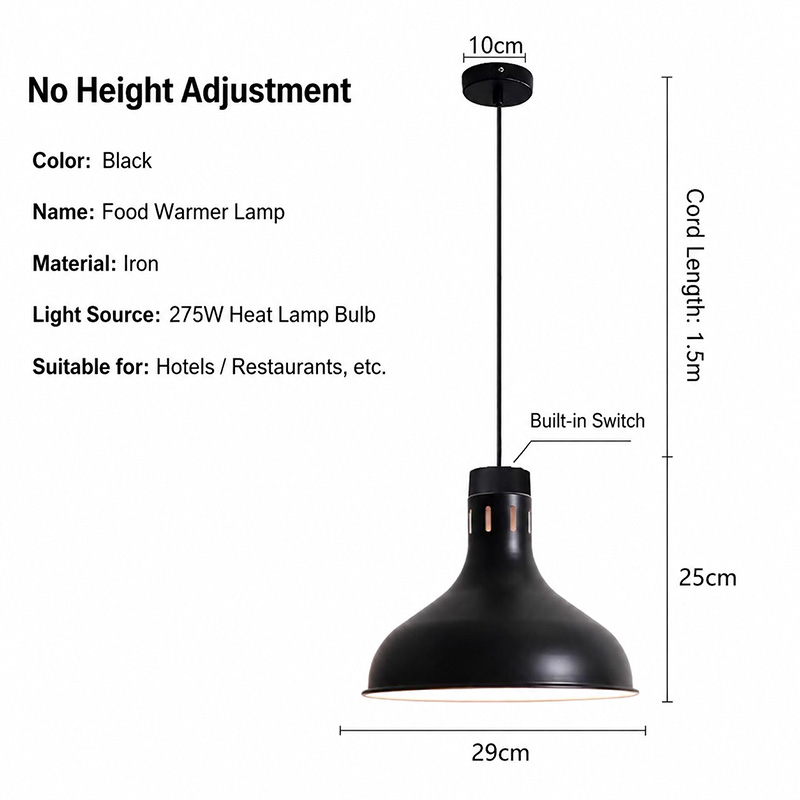
| Heat lamp | Dry radiant infrared | Surface 140–165°F (60–74°C) | 250–275 W ≈ $0.04 | Crispy foods, carving stations |
| Electric soup / sauce kettle | Direct conduction | 165–200°F (74–93°C) | 300–1,000 W | Soups, gravies, oatmeal |
| Heated drawer / holding cabinet | Convection enclosure | 140–180°F (60–82°C) | 1,000–2,000 W | Plates, pans and bulk back-of-house holding |
| Induction warmer | Magnetic induction into pan | 140–200°F (60–93°C) | 500–1,500 W | Flame-free venues, front cooking stations |
1. Chafing dishes — the default for a reason
A water pan at about 1 inch (2.5 cm) buffers the heat so nothing scorches, and the lid protects food between guests. Fuel versions need no wiring; electric versions hold a set point without supervision. Sizing help: capacity chart and buying guide.
2. Heat lamps — lowest running cost
Infrared lamps cost about $0.04 per hour for a 250 W head and add no moisture, which is exactly why they are used for fried foods and roasts. Details in how infrared heat lamps work.
3. Soup and sauce kettles
Direct-heat kettles hold 165–200°F (74–93°C) and are sized 5–11 litres. Anything below 145°F in a starch-thickened soup thickens and skins within the hour.
4. Holding drawers and cabinets
Not designed for direct guest service; they hold prepared pans and plates above 140°F (60°C) so the front line can rotate small batches, which both improves quality and cuts waste.
5. Induction
Approved where open flames are banned (many exhibitions and high-rise venues). Requires magnetic-compatible pans — check with a magnet before you buy.
6. Cold side, briefly
Every hot line has a cold counterpart: ice wells, cold pans and insulated beverage dispensers keeping product at or below 41°F (5°C). Mixing hot and cold in one station is where most buffets fail inspection.
How to choose your combination
- List every menu item and whether it survives dry heat.
- Assign each to moist (chafer/kettle) or dry (lamp) holding.
- Estimate peak covers; convert to pans using one 8-qt pan per 50 guests per entrée.
- Add one spare frame per five stations.
- Check total connected load before specifying electric models.
Energy and circuit planning
Add up the connected load before you specify electric units, or you will find the limit on opening day.
| Equipment | Typical rating | Units per 15 A / 110–120 V circuit |
| Electric chafer | 300–500 W | 2–3 |
| Heat lamp, single head | 250 W | 4 |
| Soup kettle | 300–1,000 W | 1–3 |
| Holding cabinet | 1,000–2,000 W | 1 per dedicated circuit |
| Induction warmer | 500–1,500 W | 1–2 |
A typical 100-cover line with three electric chafers, two lamps and one kettle draws about 2.5–3.2 kW — two dedicated circuits with headroom. Always confirm the destination voltage: 110–120 V for North America and Japan, 220–240 V for Europe, the Middle East and most of Asia.
Matching warmer to menu item
Use this mapping when you write your equipment schedule:
| Menu item | Warmer | Target temp | Max display time |
| Roast beef, turkey, ham carving | Double-head heat lamp at 40–50 cm | Surface 140–160°F (60–71°C) | Replace slices every 30 min |
| Fried chicken, spring rolls, fries | Single 250 W lamp at 30–40 cm | Surface 145–165°F (63–74°C) | 20–30 min per batch |
| Rice, pilaf, noodle dishes | Electric chafer, 100 mm pan | 140–150°F (60–65°C) | Refresh every 45 min |
| Sauces, gravies, curries | Electric chafer, 65 mm pan, stirred hourly | 150–165°F (65–74°C) | 90 min |
| Soups, congee, oatmeal | Soup kettle | 165–200°F (74–93°C) | Continuous with stirring |
| Breakfast eggs | Electric chafer at 65 mm depth | 140–150°F (60–65°C) | 30–45 min per fresh batch |
| Plates and backup pans | Holding drawer or cabinet | 140–180°F (60–82°C) | Rotate forward every 20 min |
Frequently Asked Questions
What is the most versatile commercial food warmer?
An electric full-size chafing dish: it holds most menu items at 140–165°F (60–74°C), works indoors every day, and costs about $0.06 per hour to run in most markets.
Which warmer uses the least energy?
A single-head 250 W heat lamp at roughly $0.04 per hour, though it only suits dry-surface foods.
Can one warmer handle both wet and dry dishes?
Not well. Moist holding protects sauced foods but softens coatings; dry holding does the opposite. Run one of each and split the menu.
What temperature should every warmer hold at?
At least 135°F (57°C); target 140–150°F (60–65°C) so brief lid openings do not drop food into the danger zone.
How many warmers does a 100-cover buffet need?
Typically six to eight pans: three 8-qt entrée chafers, three to four 4-qt side chafers, plus one heat lamp for crispy items.
Related reading
Related Articles

How Long Can Food Stay Under a Heat Lamp? The 4-Hour Rule
Food can stay under a heat lamp for up to 4 hours if it stays above 135°F (57°C); quality usually ...
Is Food Under a Heat Lamp Safe? A Straight Answer
Food under a heat lamp is safe when three conditions are met: above 135°F (57°C), under 4 hours, a...

How to Choose the Right Chafing Dish for Your Buffet
Choose the right chafing dish in 6 steps: fuel vs electric, shape, quart size, gauge and lid type. I...
Does a Heat Lamp Produce Radiation? What It Really Emits
A heat lamp emits infrared radiation, which is non-ionizing: photon energy around 0.9–1.6 eV versus...

304 vs 201 Stainless Steel: Which Alloy for Buffet Equipment?
304 (18/8) costs 20–40% more than 201 and resists rust far better because of its 8% nickel; 201 swa...
Chafing Dish Fuel vs Electric: Which Should You Use?
Electric chafing dishes cost about $0.06 per hour to run; canned fuel costs $0.60–1.50. Compare ene...